
On the Jumia platform, returns are mainly divided into two scenarios: Failed Delivery and Customer Returns. Both types of returns are handled by Jumia’s local warehouses in the respective countries.
1. Classification of Return Scenarios
- Failed Delivery: The delivery person cannot contact the buyer or the buyer refuses to receive the goods. Such products are usually returned by the logistics provider to Jumia’s local sorting center.
- Customer Returns: After signing for the goods, the buyer applies for a return within the return validity period (usually 7-15 days) due to quality issues or dissatisfaction.
2. Core Management Process
2.1 Monitoring
Sellers need to log in to the Vendor Center regularly and check the order status on the Orders -> Manage Orders page.
- Failed Delivery: The order status will be updated to “Failed Delivery”.
- Returns: The order status will be updated to “Returned”.
2.2 QC & Processing
All products returned to Jumia’s warehouse will undergo QC (Quality Control):
- Passed QC (can be re-sold): The products will re-enter the Fulfillment by Jumia (FBJ) inventory, waiting for the next buyer to place an order.
- Failed QC (damaged/wrongly shipped): If the product is damaged or the return is caused by the seller’s reason, the product will be stored in “unavailable inventory”.
2.3 Return or Abandonment
For products that cannot be resold, Chinese sellers usually have the following options (more details can be found in the chapter “Overseas Warehouse Return/Abandonment Process”):
- Local destruction (abandonment): Sellers can apply for abandonment through the WeChat questionnaire sent by email every month or through the system to avoid continuous storage fees.
- Local pickup:Sellers can arrange for a local third-party logistics company or partner to pick up the goods from the warehouse.
- Return to China: Due to the extremely high cost of cross-border reverse logistics, Jumia currently does not recommend and rarely supports directly returning a single returned product to China. It is usually recommended that sellers choose to abandon the goods.
3. Processing of Return Orders in Fulfillment by Jumia (FBJ)
For return orders of sellers using the overseas warehouse model (FBJ), the processing is as follows:
- Re-listing for sale: Products with failed delivery or returned for “7-day no-reason return” will be automatically returned to the FBJ warehouse. The warehouse will conduct QC again, and after passing, the products will be re-listed for sale.
- Failed QC (damaged/wrongly shipped): Jumia’s local warehouse will automatically sort and pack the unavailable products that failed QC every day (no need for seller confirmation). After the packaging is completed, the system will send a pickup reminder email (more details can be found in the chapter “FBJ RTV/Forfeit Process“).
4. Common Issues and Seller Tips
- Pay attention to the reasons for returns: Check the return reasons for the corresponding orders under the “Orders -> returned” status in the Seller Center, and analyze whether it is “7-day return without reason”, “size mismatch”, “description mismatch” or “quality problem”, etc. The checking steps are as follows:
Step 1: Enter the “Returned” page
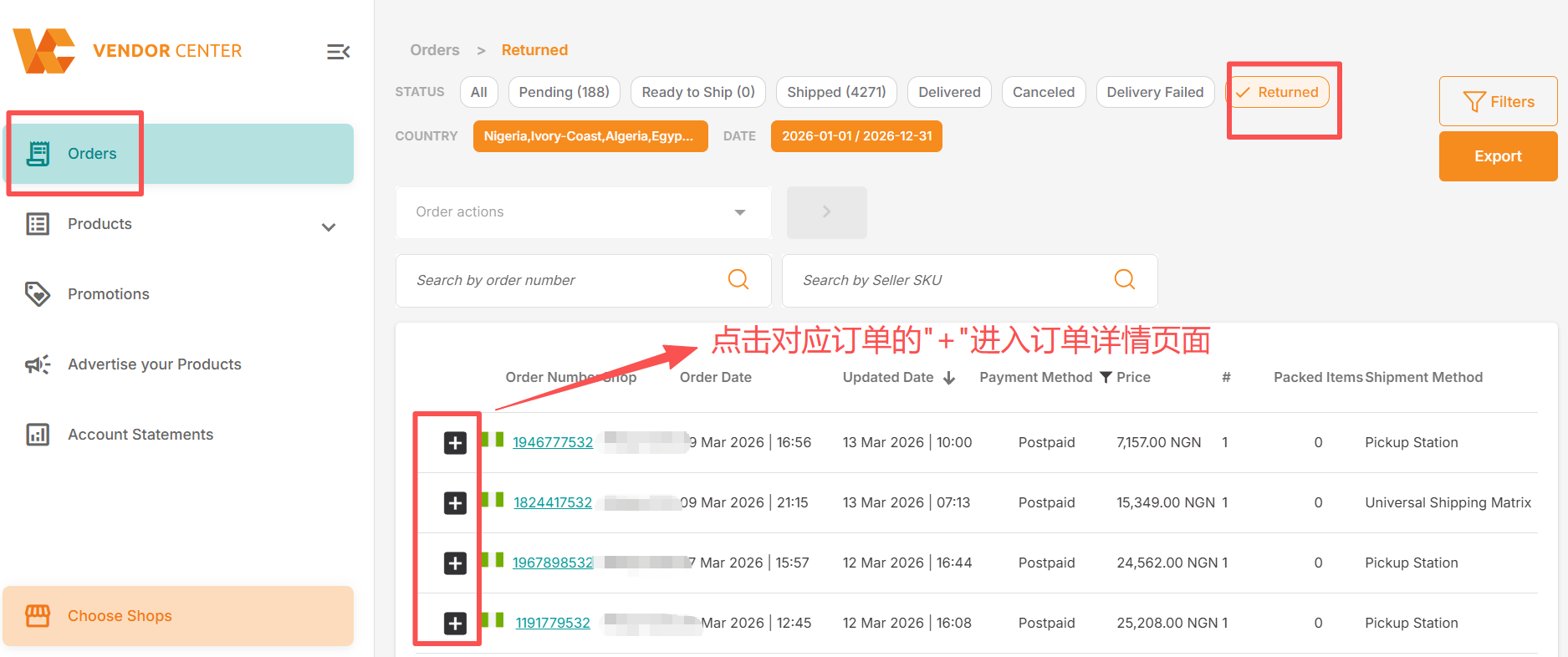
Step 2: Click the “+” sign to the left of the order you want to view to enter the order details page.
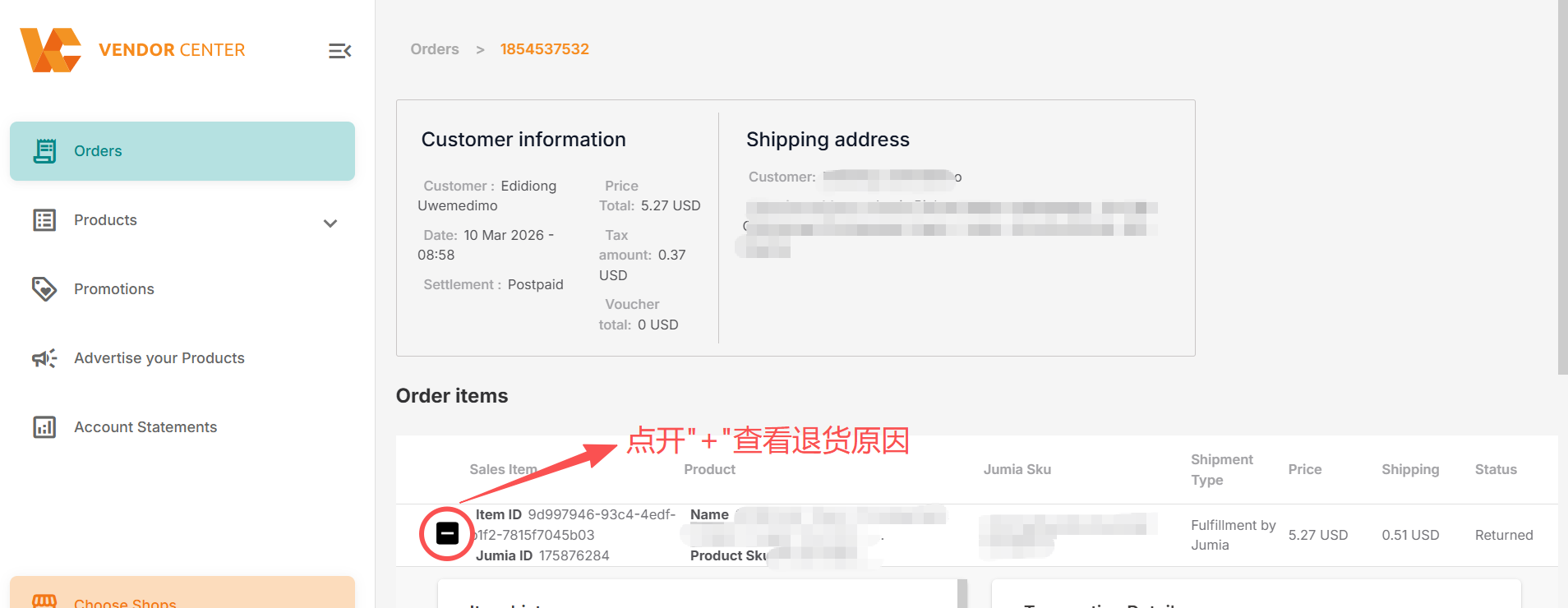
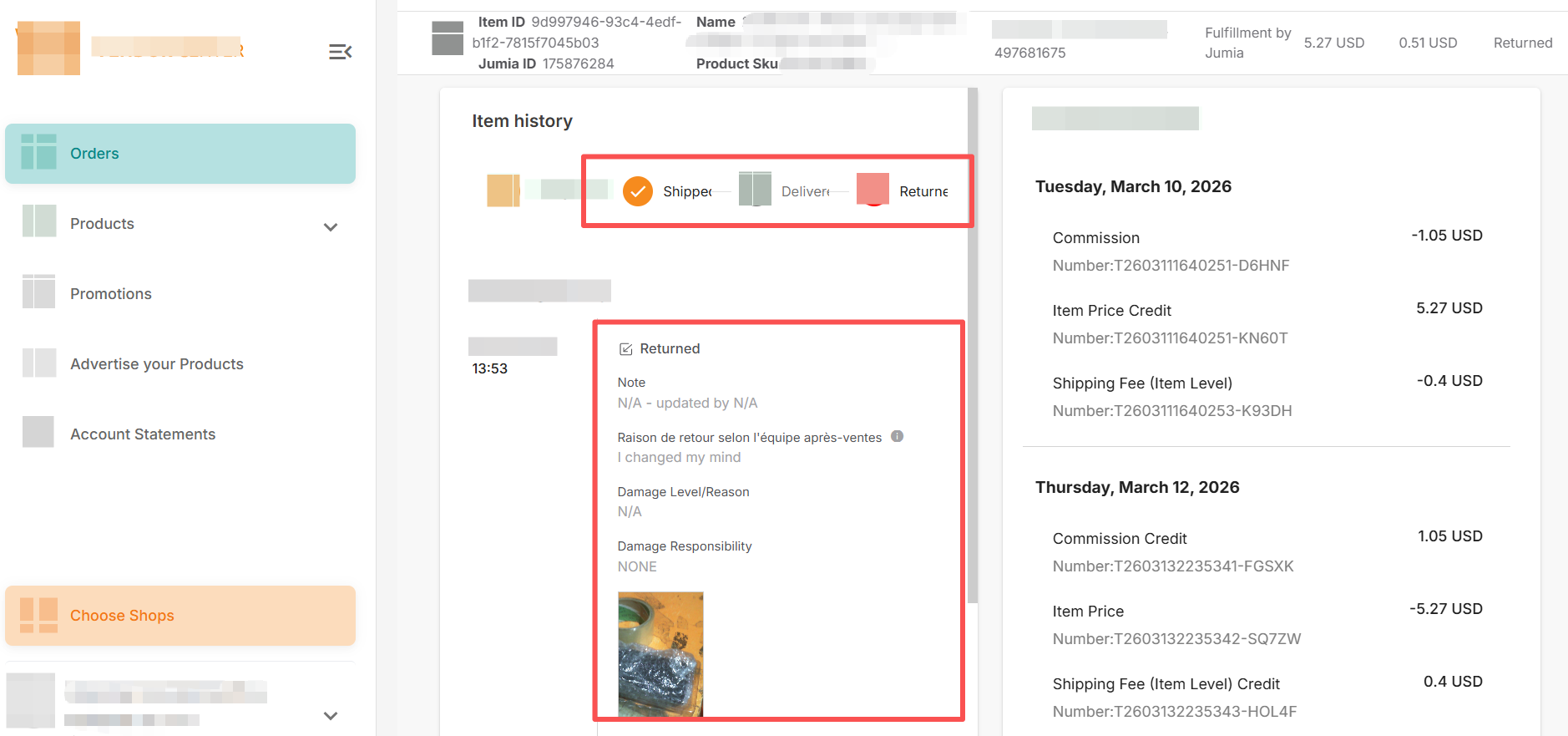
Step 3: The reason is displayed under the “Returned” status. As shown in the figure below, the reason for the order return is “I changed my mind”, which corresponds to the 7-day no-reason return policy.
- Optimize packaging: Many returns are due to damage to the outer box caused by long-distance transportation. Strengthening the inner packaging can effectively reduce losses caused by failure to pass quality inspection.
- Respond to emails promptly: The Jumia Global Team regularly sends emails regarding return inventory. Please be sure to reply with handling opinions (return/discard) within the specified time.
Summary of suggestions: Due to the special logistics environment in Africa, cross-border sellers should prioritize **”prevention first”**. Accurate product descriptions and reinforced packaging are the best ways to reduce the return rate. Once there are unsaleable returns, you should decisively choose to discard them to stop losses and avoid incurring high management fees.
